
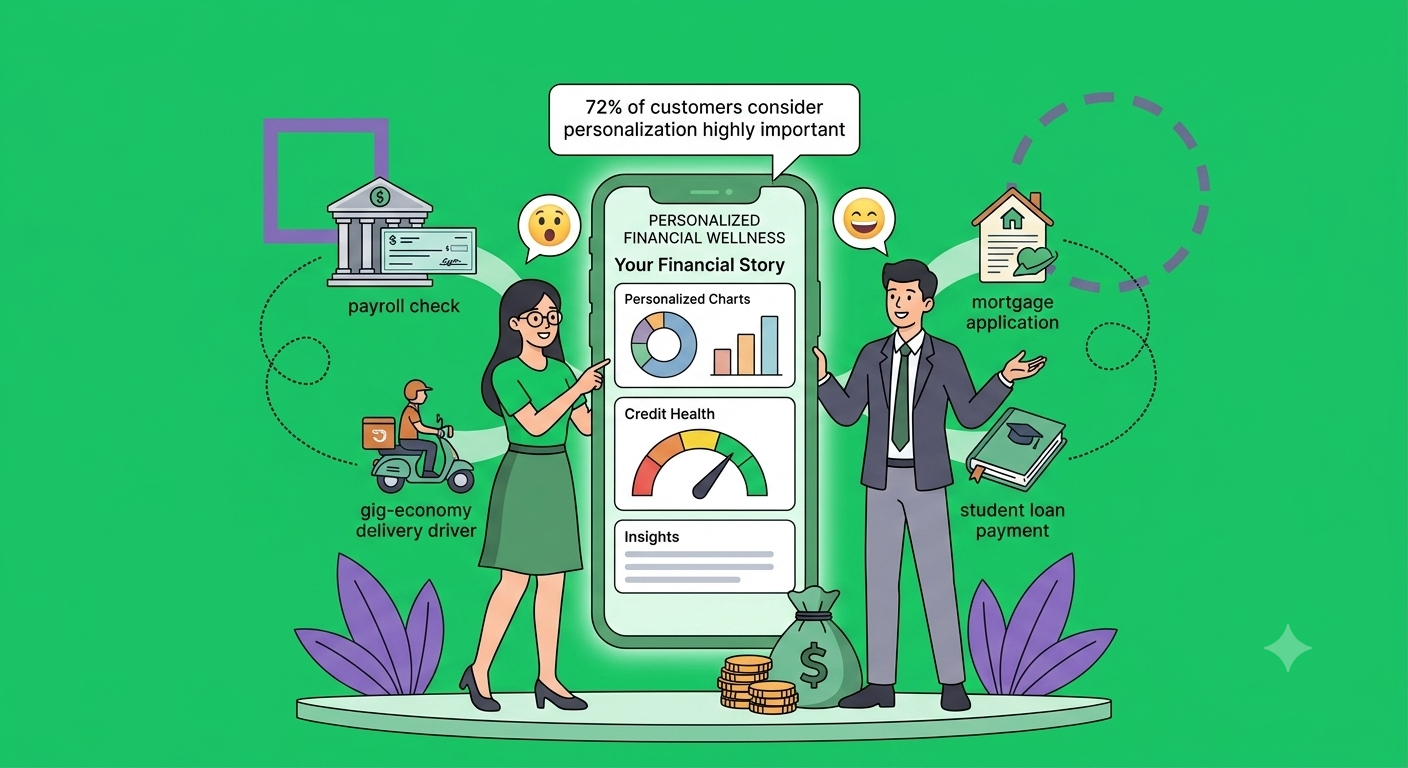

The "one-size-fits-all" approach is quickly becoming a thing of the past. The "one-size-fits-all" approach is quickly becoming a thing of the past. In fact, 72% of customers now consider personalization highly important in financial services. Today, people aren't just looking for a bank; they’re looking for a financial partner that actually understands their unique story—their goals, their hurdles, and their daily reality.
This shift toward personalized financial services is changing how banks and lenders talk to their customers.
What Does "Personalized" Actually Mean?
At its heart, personalized financial wellness isn’t about generic budgeting tips. It’s about using a person’s own specific financial data to give them advice and products that actually fit. Instead of reactive "you spent too much," it’s proactive guidance that helps improve a user's financial health in real-time.
But how do you get this level of detail without making things complicated or risky? That’s where a robust data infrastructure comes in.
From Demographics to Individual Insights
For a long time, financial institutions had to rely on broad categories and standardized models. But those often miss the small, important details that make up a person's life. For example, a young professional paying off student loans has completely different needs than a business owner, even if they earn the same amount.
Traditional methods of checking someone's background—like waiting days for manual documents—often lead to missed opportunities and frustrated customers. Modern users expect their financial apps to be as intuitive and tailored as their social media feeds.
The Role of Consumer-Permissioned Data
To bridge this gap, we need to move toward consumer-permissioned data. This simply means letting the user take the lead. By giving them a secure way to share their own employment and income data, they can prove their creditworthiness instantly.
Using tools like the Smile Wink SDK, users can connect directly to their payroll or gig platforms. This gives lenders a "smile-worthy" experience that is:
- Verified at the Source: No more guessing or manual entry; the data comes straight from the employer or government system.
- Real-Time: Financial situations change. Real-time access ensures decisions are based on what’s happening now, not six months ago.
- Privacy-First: Because it’s user-authorized, it builds trust and stays fully compliant with data privacy regulations.
Why This Matters for Everyone
When we talk about financial wellness, we’re really talking about financial inclusion. One of the biggest hurdles for people who are underbanked is a lack of "traditional" credit data. According to the World Bank Global Findex,millions of adults worldwide still lack access to formal financial services.
By moving away from rigid models and embracing a more human, data-driven approach, we can create a financial system that’s more inclusive, transparent, and—most importantly—built for the individual.