

- June 29, 2022
- June 29, 2022
Why is Smile API’s Employment Data the next big thing?
Corroborating multiple types of information such as identification cards, proof of billing, certificate of employment, and pay slips have been used to assess borrowers’ credit worth for the longest time. However, underserved sectors such as gig workers do not have access to such paper documents. Recently, BSP is encouraging banks and other financial institutions in the Philippines to use alternative data to cover underserved sectors like gig workers or freelancers. Alternative data may mean borrowers’ telecommunication data, bank statements, web behavior, and social media data. All of which may be used to assess credit worthiness. Despite its usefulness, how reliable can alternative data really be? How this impacts credit risk managers Credit risk managers have a crucial role in loan approvals because they set the standards for who good-paying borrowers should be. Alongside credit risk managers are loan operations specialists executing the standards set for ideal borrowers. The traditional way to collect data requires a lot of paperwork and is time-consuming, not to mention that there is a chance for documents to be outdated. Here is why the Banko Sentral ng Pilipinas is pushing alternative data. Using Alternative Data for Credit Scoring By combining alternative data with traditional practices, lenders can have a broader and more comprehensive view of a borrower’s ability and willingness to pay. - Telecommunication data is one kind of alternative data that multiple lending companies are utilizing. They require borrowers to give their phone numbers when signing up and applying for online loans. The goal of using telecommunication data for credit scoring is to include the unbanked and underbanked population. With the new Mobile Number Portability Act (MNPA) or RA 11202, Filipinos can keep their number regardless of changing couriers and keep all their telco data for lenders. The MNPA is most beneficial to lending companies because they can refer to a borrower’s “texting usage, data usage, voice usage, top-up patterns, and SIM age” when assessing loan applications. Another widely used alternative data source is device data and web behavior. Because loans are now accessible through OLAs or online lending applications, more and more smartphone users are able to apply for and receive loans. Using device data and web behavior is an opportunity to cover people with low financial credit literacy because they might not have the usual documents for loan applications. Bank data can also be used as alternative data for credit scoring. It should reflect in their financial transaction behavior that they are a good-paying borrower. Bank data can refer to bank statements, account balance, borrower’s income, and spending behavior. This alternative source directly indicates a borrower’s capacity to handle money, which can help lenders predict their attitude once a loan is approved. But why is it not enough? Alternative data sounds too good to be true, and it just might be. Like any other thing, there are limitations to using alternative data for credit scoring and risk assessment. - Telecommunication data, despite its convenience, may be inconsistent with the results it produces. As texting and data usage behavior changes or fluctuates over time, it is hard to use this as a reference for a user’s borrowing behavior. The shortcomings of this alternative data source do not mean that it is
- June 29, 2022
- June 29, 2022
- June 23, 2022
- June 23, 2022
How Smile API helps lenders comply with PH regulations via user-authorized, recent, and verified employment data
Within the financial sector, government rules and regulations tend to be strict. These laws protect both BSFIs and clients to keep the Philippine financial industry engine running. As part of the FinTech industry, Smile API helps lenders be compliant with PH government regulations such as the Anti-Money Laundering Act (AMLA), Know-Your-Customer (KYC), and the Data Privacy Act of 2012. First, we believe that compliance should not be tedious Loan applications may be time-consuming, tedious, and inconvenient for both the consumer and the lender side. The number of documents requested from borrowers would rather have them borrow money from their relatives, though this is not feasible in the long run. Going to and from banks can also be a hassle for employees. Aside from this, requesting paperwork from the HR department and government offices can also take time out of their daily schedules. All these concerns from borrowers' are valid, but lenders also face problems processing the verification of such documents given the need to double-check (or even triple-check!) the borrower’s Certificate of Employment, their pay slip, and even their IDs. Lenders must verify multiple clients daily, from their identities to employment data assessment. Otherwise, they would have a possible credit risk if they fail to confirm if these borrowers are fully capable of meeting their obligations after the contract. With this, lenders would agree that they are most affected by the tediousness of loan application processing. The longer it would take for them to assess applications, the fewer loan originations they can get. Without the right resources, they could be at a more significant disadvantage. With Smile API, lenders can avoid these problems with one click. Our one-click employment and identity verification API allows you to be compliant with efficiency in mind With just one user-authorized click, Smile API can give lenders access to the borrower’s verified and most recent employment data. Through Smile API, lenders can save time and verify borrower income data for faster loan approvals. This, in turn, can help lenders process more applications in one day (or even in seconds!) compared to the limited number they process without Smile. - Our service ensures lenders’ compliance with PH regulations Data Privacy Act of 2012 Smile API only processes user-authenticated data. In this way, the users can control which institutions they will share their employment data with. In fact, Smile API only serves as a “bridge” between borrowers and lenders and it does not see the data uploaded by users. Anti-Money Laundering Act Smile API provides data straight from government and employment sources, like SSS, BIR, GSIS, and multiple HR systems. We allow banks, lending companies, and other financial institutions to verify users' source of funds in compliance with the Anti-Money Laundering Act. KYC (Know-Your-Customer) The Know-Your-Customer (KYC) process is an essential part of loan origination. By providing identity data directly from the source, it will be easier for lenders to confirm that their applicants are legitimate and real. Smile API is a “compliance-ready” bridge between lenders and borrowers Smile API's goal has always been to offer an alternative solution to a never-ending problem, and we want to do this right. Complying with laws is just an essential requirement, but we know that it's important,
- June 23, 2022
- June 23, 2022
- May 12, 2022
- May 12, 2022
5 Reasons for Using Third-party APIs in Your Fintech Application
API stands for "Application Programming Interface." It's a set of tools and protocols that allow different programs to communicate with each other. APIs can provide access to a company's data, systems, and processes, making it easier for companies to extend their reach and interact with their customers and partners. The use of API technologies is becoming increasingly popular particularly in the financial services industry. There are many reasons why, but here are five of the most common: Increased Efficiency APIs can help fintechs quickly access and integrate data from various external sources, which can lead to increased efficiency and faster processing times. By integrating with third-party APIs, fintechs can also reduce the amount of time needed in programming bespoke solutions. For example, if a fintech needs access to a specific loan securitization platform, using an API can allow them to easily connect with this service without having to go through the hassle of building their own interface. Access To Specialized Data Many institutions such as government agencies, banks, employment platforms, credit bureaus, data aggregators, and other types of companies have access to specialized data that is not available through public sources. By using APIs, fintech can gain access to this valuable information without having to build a bespoke solution from scratch. By integrating with such third-party resources, fintechs can gain access to valuable information and new opportunities that would not be available on their own. Ability to Scale Quickly Third-party APIs also give companies the ability to scale their operations quickly. By using an API, businesses can build a platform from scratch or integrate an existing one into their system. This allows them to quickly increase capacity and reach new heights. Finally, using third-party APIs helps businesses save money on development costs. Another important benefit of using third-party APIs is that it leads to increased cooperation between different companies. By sharing their resources, businesses can achieve greater economies of scale. Greater Flexibility and Agility Another benefit of using third-party APIs is that they offer a greater degree of flexibility. By allowing companies to integrate different services without having to redesign their existing systems, businesses can quickly adapt to changes in the marketplace. Additionally, APIs can also help businesses to identify new markets and opportunities. By partnering with other businesses, companies can tap into valuable data and insights that they may not have been able to access on their own. This can help them to develop new products and services that may appeal to a wider market, or serve previously unmet market needs. Increased Innovation Last but not least, using third-party APIs can lead to increased innovation. By tapping into the expertise of other businesses, developers can create new and innovative solutions that would otherwise be impossible. Third-party APIs offer a way to connect with a large community of developers who are passionate about fintech applications. By sharing your ideas with these experts, you can get feedback on how to make your application better. This interaction between developers is essential for creating the most innovative and successful applications possible. Additionally, by collaborating with other developers, companies can gain access to
- May 12, 2022
- May 12, 2022

- May 12, 2022
- May 12, 2022
What is Embedded Finance and How Will it Revolutionize Financial Services in the Philippines?
Embedded finance has the potential to revolutionize the financial services industry in the Philippines. Simply put, embedded finance is a revolutionary new approach to financial services that uses technology to provide richer and more compelling products and services. Embedded finance is based on the premise that even non-financial services companies can offer financial services such as payments, lending, and insurance to streamline processes, reduce costs, and improve customer service using technology. Consumers get access to financial services at the point of need, rather than having to visit a bank. For example, if you were shopping for a new computer online, you can get instant access to a loan to pay for the purchase, get it with insurance, and then pay for it instantly, completing the entire transaction electronically. This is a very promising development for the Philippines because it has a population of over 100 million people who are underserved by traditional financial institutions. This makes it a ripe target for providers of innovative financial products and services. Non-traditional providers such as mobile payment platforms and online lenders have already begun to penetrate the Philippine market, so embedded finance could provide even more options for consumers. If embedded finance can provide better products and services at lower costs than traditional banks, the industry may see a major transformation. One of the biggest benefits of embedded finance is that it can help businesses expand their reach and reduce costs. This is particularly important in countries like the Philippines, which are struggling with high levels of poverty and inequality. Developments in embedded finance takes into account the unique needs and constraints of developing economies like the Philippines. In the retail sector, for example, embedded finance enables the creation of new platforms that allow purchases and payments to be more convenient, without the need for a bank account or credit card. This could benefit not only consumers but also businesses, as it could lead to a wider reach and increased profits. In lending, embedded finance makes it easier for consumers and small businesses to access affordable loans and credit products. Overall, embedded finance has the potential to play a significant role in the development of the Philippine economy. It can help consumers get access to financial services, and help businesses expand their reach and reduce costs while promoting innovation across various sectors. Embedded finance has already had a significant impact on the financial services industry in countries like the United States and China. In the Philippines, it could play a major role in advancing economic growth and helping to spur innovation across various sectors. Interested in making embedded finance happen? Are you part of a company that is trying to embed financial services into your products and services? Contact us at Smile to see how we can help!
- May 12, 2022
- May 12, 2022

- March 24, 2022
- March 24, 2022
The Rise of the Gig Economy: What Does It Mean For You?
In recent years, the corporate world has undergone a significant transformation as the gig economy has gained popularity. Companies are increasingly turning to contract workers for help. With an increasing number of people doing freelance work and contract projects, the traditional workplace is changing and becoming more flexible. What is the Gig-economy? The term "gig" originates from a social jargon that refers to live musical concerts. They planned their schedules and took on numerous show initiatives while providing music at a given time and are not limited by location. Non-permanent occupations are rising and increasing in the gig economy, a phenomenon in the economy and employment structure. Rather than hiring full-time employees, businesses turn to freelancers and independent contractors to perform their tasks. Short-term contracts, freelance work, and part-time employment are becoming increasingly prevalent. The internet and technology are responsible for more than just new business creation and more accessible work and communication. Technology's rapid growth affects people and businesses. Working in an office is no longer essential, and full-time employees are no longer required. Three primary drivers power this rapid growth of the gig economy: The emergence of new businesses that use technology to their advantage Financial strains on traditional businesses An increasing need to balance work and personal life The Unstoppable Rise of the Gig Economy Before the pandemic began, the Philippines ranked 1st among the fastest-growing global gig economy markets. There are probably more than 1.5 million freelancers in the country. Freelancers lead the youth movement in Asia, 82% of which are 35 years old and below, compared to only 47% in North America. Unlike full-time employees who work for one employer, freelancers often work for multiple clients and do various activities. Those who work solely as freelancers make more per hour and are happier with their lifestyle than those working full-time for a firm. Some of the top gig sites that freelancers use for their "gigs" are Fiverr, Upwork and Onlinejobs.ph. People earn through these sites by allowing them to present to the client and chosen assignments. Aside from the client, gig jobs provide you the feeling of being your boss. Some persons begin at a relatively low price, but as their experience grows, they can increase their rates. How Global Players Play in the Gig Economy The Philippines is at the forefront of a global gig economy revolution. A recent study by McKinsey Global Institute found that more than 20% of the Philippine workforce engages in independent work, making it one of the countries with the highest percentage of gig workers globally. This number will only grow as technology makes it easier for people to connect and do business online. The top players in the gig economy are global players who have taken advantage of online platforms to build successful businesses. These entrepreneurs have found ways to monetize their skills and talents by providing valuable services to others. They earn substantial incomes from their work, proving that the gig economy is a viable way to make a living. However, the gig economy is still relatively new in the market. There are no standardized systems and processes, making it hard for financial institutions and employers to gather and verify gig economy employment and inco
- March 24, 2022
- March 24, 2022
- March 23, 2022
- March 23, 2022
Product Update: Q1 2022
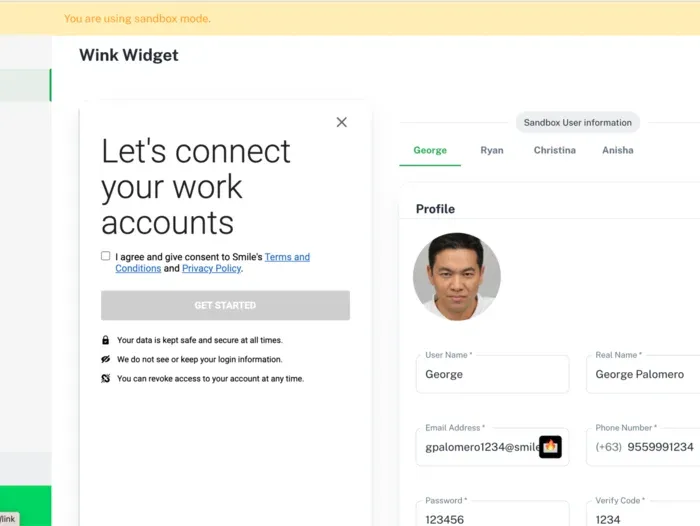
We have been working hard to greatly enhance the value we are bringing to you, our customers and partners, in our commitment to being your trusted source for employment and income information that we hope will make you smile! In this latest round of product enhancements this quarter, we are excited to announce that we have made great progress in providing you: greater worker coverage greater data coverage tools to more easily test the product means to make it easier for your users to share their data with you Greater Worker Coverage Phillippine Labor Force Worker Coverage Wage and Salary Workers Self-employed - To start, we are releasing several new features, to greatly widen our coverage in the Philippines! We are now moving beyond just covering gig workers, to now include workers who have regular employment as well! This potentially gives you access to majority of the population in the Philippines of working age, as much as 65%! We achieve this by providing: Data from their contributions to the country’s social insurance systems - we are now able to cover and link accounts from employees’ social insurance data in the Philippines via our Wink Widget. Social insurance contributions are mandatory for most employees and their employers in the Philippines, whether those in the private sector (through the government-owned Social Security System), or the public sector (through the Government Service Insurance System). Employers are required to maintain current information about their employees, and remit their contributions to the social insurance system along with the contributions of their employees, which are typically automatically deducted and withheld by the employer on a monthly basis. Support for file uploads - for most employees in the Philippines, we recognize that their on-hand employment and income data will likely still be in a document: either as a digital file, or printed on a piece of paper. In our latest release, we now support the ability for these employees to upload files—such as a PDF (Portable Document Format) file; or a photo, scan or screenshot of a paper document. They can use this to more readily share proof of their employment—such as their social insurance information, or their company ID. They can also use this to share proof of income, such as copies of their payslips, or to upload a copy of their latest BIR 2316 tax certificate—a certificate issued by employers to show amount of income they have paid and amount of tax withheld from that income given to their employees. This is just the beginning though, as soon we will be allowing the upload of more file types. - Automatic recognition and digital conversion - for certain types of documents, we also support the automatic conversion of the photos, screenshots or scanned copies of these documents into a machine-readable format via Optical Character Recognition or OCR. We are able to do this specifically for screenshots or photos of employees’ records in the government’s social insurance website, or via copies of their latest 2316 tax certificate. We use the latest in machine learning and artificial intelligence to automatically recognize the data and convert it into JSON (Javascript Object Notation), which can then be retrieved via our API. For easy review and comparison, we also provide you a link to the original uploaded file, which we are able to store temporari
- March 23, 2022
- March 23, 2022