

- June 9, 2022
- June 9, 2022
Smile API expansion to bring financial inclusion to 90% of the Filipino workforce
- MANILA, Philippines (June 9, 2022) -- Fourteen million Filipinos still do not have adequate access to formal credit with five out of 10 having no requirements. This is the current state of financial inclusion in the Philippines today, as shared in a recent media forum. This is the problem that companies such as Smile API and movements such as Digital Pilipinas are working tirelessly to address. “At Smile API, we believe that access to your own data is a basic right,” shared Smile API CEO Jerome Eger. “We serve as a bridge between you and your financial goals. Because if you have no data, you are excluded from a lot of services that ensure livelihood and improve quality of life which are important for our daily ins and outs. Three out of ten Filipinos don’t get access to credit or financial services at all.” At the recent webinar “Let your Data Work for You”, co-organizer Smile API Chief Product Officer Jan Pabellon shared that their service now covers 40 million Filipinos, consisting of 25 million salaried employees, 11.7 million self-employed individuals, and 4.1 million government employees. This represents one of the major developments in the country’s march towards an era of Open Finance and unprecedented financial inclusion. Wide AND deep But the wide coverage is only one measure of how effectively Smile API can deliver its unique service, another is the depth of the data that is available. Although Smile API’s network is already extensive, they are still looking for and reaching out to various online platforms and institutions to provide even more comprehensive data. Smile API is also interested in the end user side of the process, and will be running a 3 month survey on various online platforms. The regional app developer will be donating 50 pesos per completed online survey to Tahanang Walang Hagdanan (TWH), Smile API’s chosen NGO partner for the company’s CSR efforts. Jan Pabellon shared that TWH was selected because its mission of inclusion intersects with Smile API’s own values. TWH Administrative Manager Ramon Apilado was on hand to talk about TWH and the many efforts of his well established NGO, that is dedicated to uplifting the lives of Filipinos with orthopedic disabilities. “We may be persons with disabilities but we can do jobs other people can’t do, you just have to give us the opportunity and we can do the job well,” shared Apilado. “We are thankful to Smile API for choosing our organization TWH to be one of their partners, and we are very happy because for very completed survey, 50 pesos will be donated to our organization,” he concluded. To access the survey, go to: getsmileapi.com/employee-survey. Data ownership for jobs and loans Open Finance enables financial data like credit standing, savings, and loans, to be shared with qualified, secure third-party providers. It enables customers to have greater control over their data and access to financial tools, while providing businesses information they need for better decision-making. Championing its growth in the country are Smile API, which provides real-time user-authorized access to recent, verified nand comprehensive employment data, and webinar co-organizer Digital Pilipinas, the largest private sector-led movement to tech up the Philippines. Another advantage of Smile API is the reduction of recruitment processing time. ”Prior to Smile API, 20,000 applications used to take weeks to process; it
- June 9, 2022
- June 9, 2022
- May 12, 2022
- May 12, 2022
5 Reasons for Using Third-party APIs in Your Fintech Application
API stands for "Application Programming Interface." It's a set of tools and protocols that allow different programs to communicate with each other. APIs can provide access to a company's data, systems, and processes, making it easier for companies to extend their reach and interact with their customers and partners. The use of API technologies is becoming increasingly popular particularly in the financial services industry. There are many reasons why, but here are five of the most common: Increased Efficiency APIs can help fintechs quickly access and integrate data from various external sources, which can lead to increased efficiency and faster processing times. By integrating with third-party APIs, fintechs can also reduce the amount of time needed in programming bespoke solutions. For example, if a fintech needs access to a specific loan securitization platform, using an API can allow them to easily connect with this service without having to go through the hassle of building their own interface. Access To Specialized Data Many institutions such as government agencies, banks, employment platforms, credit bureaus, data aggregators, and other types of companies have access to specialized data that is not available through public sources. By using APIs, fintech can gain access to this valuable information without having to build a bespoke solution from scratch. By integrating with such third-party resources, fintechs can gain access to valuable information and new opportunities that would not be available on their own. Ability to Scale Quickly Third-party APIs also give companies the ability to scale their operations quickly. By using an API, businesses can build a platform from scratch or integrate an existing one into their system. This allows them to quickly increase capacity and reach new heights. Finally, using third-party APIs helps businesses save money on development costs. Another important benefit of using third-party APIs is that it leads to increased cooperation between different companies. By sharing their resources, businesses can achieve greater economies of scale. Greater Flexibility and Agility Another benefit of using third-party APIs is that they offer a greater degree of flexibility. By allowing companies to integrate different services without having to redesign their existing systems, businesses can quickly adapt to changes in the marketplace. Additionally, APIs can also help businesses to identify new markets and opportunities. By partnering with other businesses, companies can tap into valuable data and insights that they may not have been able to access on their own. This can help them to develop new products and services that may appeal to a wider market, or serve previously unmet market needs. Increased Innovation Last but not least, using third-party APIs can lead to increased innovation. By tapping into the expertise of other businesses, developers can create new and innovative solutions that would otherwise be impossible. Third-party APIs offer a way to connect with a large community of developers who are passionate about fintech applications. By sharing your ideas with these experts, you can get feedback on how to make your application better. This interaction between developers is essential for creating the most innovative and successful applications possible. Additionally, by collaborating with other developers, companies can gain access to
- May 12, 2022
- May 12, 2022

- May 12, 2022
- May 12, 2022
What is Embedded Finance and How Will it Revolutionize Financial Services in the Philippines?
Embedded finance has the potential to revolutionize the financial services industry in the Philippines. Simply put, embedded finance is a revolutionary new approach to financial services that uses technology to provide richer and more compelling products and services. Embedded finance is based on the premise that even non-financial services companies can offer financial services such as payments, lending, and insurance to streamline processes, reduce costs, and improve customer service using technology. Consumers get access to financial services at the point of need, rather than having to visit a bank. For example, if you were shopping for a new computer online, you can get instant access to a loan to pay for the purchase, get it with insurance, and then pay for it instantly, completing the entire transaction electronically. This is a very promising development for the Philippines because it has a population of over 100 million people who are underserved by traditional financial institutions. This makes it a ripe target for providers of innovative financial products and services. Non-traditional providers such as mobile payment platforms and online lenders have already begun to penetrate the Philippine market, so embedded finance could provide even more options for consumers. If embedded finance can provide better products and services at lower costs than traditional banks, the industry may see a major transformation. One of the biggest benefits of embedded finance is that it can help businesses expand their reach and reduce costs. This is particularly important in countries like the Philippines, which are struggling with high levels of poverty and inequality. Developments in embedded finance takes into account the unique needs and constraints of developing economies like the Philippines. In the retail sector, for example, embedded finance enables the creation of new platforms that allow purchases and payments to be more convenient, without the need for a bank account or credit card. This could benefit not only consumers but also businesses, as it could lead to a wider reach and increased profits. In lending, embedded finance makes it easier for consumers and small businesses to access affordable loans and credit products. Overall, embedded finance has the potential to play a significant role in the development of the Philippine economy. It can help consumers get access to financial services, and help businesses expand their reach and reduce costs while promoting innovation across various sectors. Embedded finance has already had a significant impact on the financial services industry in countries like the United States and China. In the Philippines, it could play a major role in advancing economic growth and helping to spur innovation across various sectors. Interested in making embedded finance happen? Are you part of a company that is trying to embed financial services into your products and services? Contact us at Smile to see how we can help!
- May 12, 2022
- May 12, 2022
- May 10, 2022
- May 10, 2022
Smile API is Empowering Users to Benefit from their Own Data
Smile API is Empowering Users to Benefit from their Own Data Digital transformation has ushered in a data-driven world. Data is being generated at a pace never seen before: about 2.5 quintillion bytes of data a day by some estimates. Most people don't realize it, but they're generating and sharing many of this data, often times about themselves, everywhere. They do it when they go to school, when apply for a job, when they buy something, when they transact at their bank, when they share a photo, watch a video, or play a game. As this kind of data becomes ubiquitous, many businesses have started to reap the benefits: figuring out ways to be able to use this data for their benefit. For example, advertising companies have used this data to allow advertisers to target specific types of people based on their activities, interests or habits. However, it has become ironic that the the very people who generate and share lots of data rarely benefit from it themselves. But that’s about to change. What if people can benefit from the data they generate? Imagine a world where people can use their own personal data for their direct benefit. What if owners of this data can use it to their advantage to get access to more services? What new opportunities will that create? If you’ve ever tried to apply for a loan or a job, you know how tedious it can be. You’ll need to get various documents to fulfill varying requirements. This is hard for the applicant, but it also poses challenges for an employer, a financial institution, or a bank. This problem is exactly what Smile API aims to solve! Smile API allows people to use their personal data, specifically their employment and income data, for their own benefit. In turn, they get to access to more opportunities such as getting offered better financial services or job opportunities. Users are able to take control of their own data – they get to decide which data is shared with whom. Smile will not share any type of data without the owner’s full consent. Smile simply acts as a bridge between users' systems of record for their employment and income data (such as their social insurance system, payroll system, and others) and with parties needing this data, such as financial services companies, employment verification companies and others. Every time this is done, Smile gets the user's permission first. In short, everything is done with the user’s total awareness and control, and is done in a secure and transparent way. The value of employment and income data in financial services Employment and income data is especially useful in the financial services industry. Traditionally, companies in the financial services industries, particularly in lending as an example, had to rely on demographic data and credit scores to get an indication of a person's financial standing and creditworthiness. While these traditional sources of data are valuable, data such as employment and income data or what the industry calls "alternative data" provides a more complete picture of the customer. While it can be argued that this data is being asked for by financial services companies from their customers already, typically the existing process for doing so is mired in inefficiency and bad user experience. Companies would ask for a copy of people's employment certificate, payslip, tax return or other proof of income. They would then have someone manuall
- May 10, 2022
- May 10, 2022

- March 24, 2022
- March 24, 2022
The Rise of the Gig Economy: What Does It Mean For You?
In recent years, the corporate world has undergone a significant transformation as the gig economy has gained popularity. Companies are increasingly turning to contract workers for help. With an increasing number of people doing freelance work and contract projects, the traditional workplace is changing and becoming more flexible. What is the Gig-economy? The term "gig" originates from a social jargon that refers to live musical concerts. They planned their schedules and took on numerous show initiatives while providing music at a given time and are not limited by location. Non-permanent occupations are rising and increasing in the gig economy, a phenomenon in the economy and employment structure. Rather than hiring full-time employees, businesses turn to freelancers and independent contractors to perform their tasks. Short-term contracts, freelance work, and part-time employment are becoming increasingly prevalent. The internet and technology are responsible for more than just new business creation and more accessible work and communication. Technology's rapid growth affects people and businesses. Working in an office is no longer essential, and full-time employees are no longer required. Three primary drivers power this rapid growth of the gig economy: The emergence of new businesses that use technology to their advantage Financial strains on traditional businesses An increasing need to balance work and personal life The Unstoppable Rise of the Gig Economy Before the pandemic began, the Philippines ranked 1st among the fastest-growing global gig economy markets. There are probably more than 1.5 million freelancers in the country. Freelancers lead the youth movement in Asia, 82% of which are 35 years old and below, compared to only 47% in North America. Unlike full-time employees who work for one employer, freelancers often work for multiple clients and do various activities. Those who work solely as freelancers make more per hour and are happier with their lifestyle than those working full-time for a firm. Some of the top gig sites that freelancers use for their "gigs" are Fiverr, Upwork and Onlinejobs.ph. People earn through these sites by allowing them to present to the client and chosen assignments. Aside from the client, gig jobs provide you the feeling of being your boss. Some persons begin at a relatively low price, but as their experience grows, they can increase their rates. How Global Players Play in the Gig Economy The Philippines is at the forefront of a global gig economy revolution. A recent study by McKinsey Global Institute found that more than 20% of the Philippine workforce engages in independent work, making it one of the countries with the highest percentage of gig workers globally. This number will only grow as technology makes it easier for people to connect and do business online. The top players in the gig economy are global players who have taken advantage of online platforms to build successful businesses. These entrepreneurs have found ways to monetize their skills and talents by providing valuable services to others. They earn substantial incomes from their work, proving that the gig economy is a viable way to make a living. However, the gig economy is still relatively new in the market. There are no standardized systems and processes, making it hard for financial institutions and employers to gather and verify gig economy employment and inco
- March 24, 2022
- March 24, 2022
- March 23, 2022
- March 23, 2022
Product Update: Q1 2022
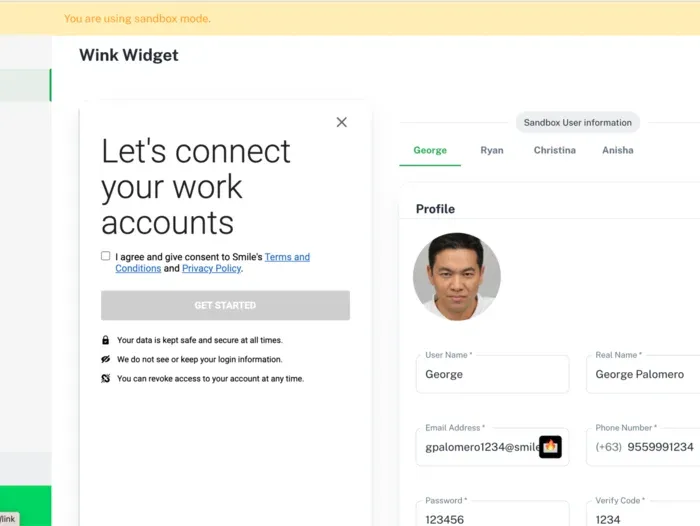
We have been working hard to greatly enhance the value we are bringing to you, our customers and partners, in our commitment to being your trusted source for employment and income information that we hope will make you smile! In this latest round of product enhancements this quarter, we are excited to announce that we have made great progress in providing you: greater worker coverage greater data coverage tools to more easily test the product means to make it easier for your users to share their data with you Greater Worker Coverage Phillippine Labor Force Worker Coverage Wage and Salary Workers Self-employed - To start, we are releasing several new features, to greatly widen our coverage in the Philippines! We are now moving beyond just covering gig workers, to now include workers who have regular employment as well! This potentially gives you access to majority of the population in the Philippines of working age, as much as 65%! We achieve this by providing: Data from their contributions to the country’s social insurance systems - we are now able to cover and link accounts from employees’ social insurance data in the Philippines via our Wink Widget. Social insurance contributions are mandatory for most employees and their employers in the Philippines, whether those in the private sector (through the government-owned Social Security System), or the public sector (through the Government Service Insurance System). Employers are required to maintain current information about their employees, and remit their contributions to the social insurance system along with the contributions of their employees, which are typically automatically deducted and withheld by the employer on a monthly basis. Support for file uploads - for most employees in the Philippines, we recognize that their on-hand employment and income data will likely still be in a document: either as a digital file, or printed on a piece of paper. In our latest release, we now support the ability for these employees to upload files—such as a PDF (Portable Document Format) file; or a photo, scan or screenshot of a paper document. They can use this to more readily share proof of their employment—such as their social insurance information, or their company ID. They can also use this to share proof of income, such as copies of their payslips, or to upload a copy of their latest BIR 2316 tax certificate—a certificate issued by employers to show amount of income they have paid and amount of tax withheld from that income given to their employees. This is just the beginning though, as soon we will be allowing the upload of more file types. - Automatic recognition and digital conversion - for certain types of documents, we also support the automatic conversion of the photos, screenshots or scanned copies of these documents into a machine-readable format via Optical Character Recognition or OCR. We are able to do this specifically for screenshots or photos of employees’ records in the government’s social insurance website, or via copies of their latest 2316 tax certificate. We use the latest in machine learning and artificial intelligence to automatically recognize the data and convert it into JSON (Javascript Object Notation), which can then be retrieved via our API. For easy review and comparison, we also provide you a link to the original uploaded file, which we are able to store temporari
- March 23, 2022
- March 23, 2022